Face Sculpting: Exercises, Tools, and What Actually Works
Open social media on any given morning and the pattern is familiar: a gua sha stone along the jawline, a chilled roller under the eyes, and a face yoga routine promising a lifted, sculpted look in minutes. The appeal is obvious, because the idea of a sharper face without needles, downtime, or surgery is easy to buy into. The problem is that most viral claims move faster than biology.
Some face sculpting methods do work, but not in the way they are usually advertised. If your goal is less puffiness, better circulation, and a fresher-looking face, certain tools can help. If your goal is permanent lift, fat reduction, or structural facial reshaping, home routines are being oversold.
What face sculpting tools actually do
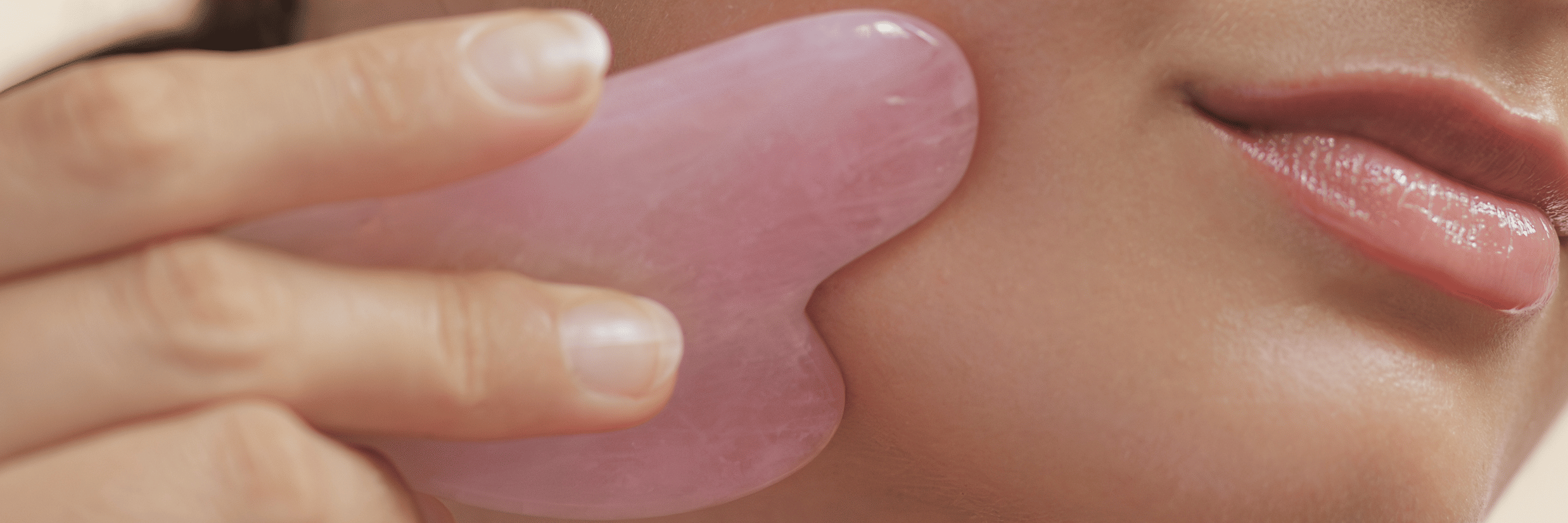
Manual tools such as gua sha stones, facial rollers, and similar sculpting devices can create a visible short-term improvement. What you are usually seeing is reduced puffiness and better surface circulation, not a permanent change in the shape of the face.
That distinction matters. A face can look more defined when superficial fluid moves away from the cheeks, jawline, or under-eye area. Skin can also appear brighter when circulation improves. In practice, this is why many people say their face looks more “snatched” immediately after a session. The result is real, but it is temporary.
This is also why these tools work best for:
- Morning puffiness
- Post-travel facial swelling
- Mild fluid retention
- Pre-event preparation
The Truth About Face Yoga
Face yoga is often sold as facial strength training. The idea is simple: if you exercise the muscles in the face, they should become firmer and more lifted. It sounds logical, but facial anatomy is not the same as training your arms or legs.
Many facial muscles connect closely to the skin. Repetitive, exaggerated movements can sometimes reinforce the same expression patterns that contribute to visible lines. In other words, if someone is repeatedly contracting the forehead, around the mouth, or the eye area in an aggressive way, the result may not always be smoother-looking skin.
There is another issue most people ignore: not every heavy-looking jaw or tired face is caused by weak muscles. Often, the real issue is muscle guarding. That means chronic clenching, tightness, posture strain, stress, screen fatigue, and accumulated facial tension. In those cases, more “exercise” is usually not the answer. Release is.
What actually works, based on the concern
The smartest way to approach face sculpting is to stop asking what is trending and start asking what the actual problem is.
If your issue is puffiness
If you tend to wake up looking swollen around the cheeks, jawline, or eyes, home tools can help. A cold roller or correctly used gua sha technique may reduce visible fluid retention for a few hours and give the face a cleaner outline.
If your issue is jaw tension
If your face feels tight, heavy, or clenched, especially around the jaw and temples, deeper release matters more than surface tools. Home routines rarely reach the level of chronic muscular tension that builds from stress, posture, and day-to-day strain.
If your issue is dullness and tired skin
If the face looks flat, dehydrated, or congested, the answer is usually not a trend tool. It is better skin treatment selection. In that case, advanced skin care treatments can make more sense than repeating the same home ritual and expecting a different result.
If your issue is event preparation
If you want your face to look rested and polished before an occasion, a quick home massage may help a little, but the result is rarely enough on its own. This is where a structured treatment plan becomes more useful, especially when paired with professional salon services for the final finish.
Why your city changes how your face behaves
One of the biggest mistakes in beauty content is pretending every face reacts the same way in every environment. It does not. Climate, heat, humidity, pollution, and dehydration all affect the way the face holds fluid, shows texture, and responds to stress.
That is exactly why a generic sculpting routine does not always translate well in India. Someone dealing with coastal humidity and frequent puffiness has a different pattern from someone dealing with dry heat and barrier stress.
At IOSIS, this becomes especially relevant across its service footprint in Mumbai, Guwahati, and Raipur. In Mumbai and Guwahati, humidity and environmental load can make the face look more water-retentive and heavy. In Raipur, dry conditions can make skin feel tighter, flatter, and more reactive. The visible result may look similar on the surface, but the treatment need is not the same.
That is where IOSIS’s Fusion of 4 philosophy, Skin, Salon, Spa, and Slimming, creates a more useful framework. Instead of guessing, the face is assessed in the context of skin quality, body retention, lifestyle, and grooming goals together.
When home tools are not enough
There is nothing wrong with home sculpting tools. The mistake is expecting them to do everything.
They are not built to:
- Permanently lift sagging tissue
- Reshape bone structure
- Replace deep facial release
- Correct chronic puffiness caused by broader systemic patterns
- Solve skin quality issues such as dehydration, sensitivity, or persistent dullness
For clients who want a more personalised treatment path, especially before events or seasonal transitions, it also makes sense to pair facial treatment planning with related care across skin, spa, and salon services rather than treating the face in isolation.
Sculpting facial vs regular facial
A regular facial and a sculpting facial are not the same thing, and choosing the wrong one is where many clients waste both time and money.
Regular facial
A regular facial focuses primarily on:
- Cleansing
- Exfoliation
- Hydration
- Congestion management
- Surface glow
Sculpting facial
A sculpting facial focuses more on:
- De-puffing
- Manual contour work
- Circulation
- Muscle release
- Short-term visible definition
If your concern is mostly skin texture and radiance, a classic facial may serve you better. If your concern is visible heaviness, jaw tension, or facial fluid retention, a sculpting-led treatment is the stronger choice.
The IOSIS approach to face sculpting
The real value of professional care is not that it sounds more premium. It is that it gets more precise.
IOSIS does not need to chase viral beauty language to make face sculpting attractive. The stronger positioning is clinical restraint and tailored care. A client with fluid retention needs something different from a client with jaw tension. A client preparing for an event needs something different from a client dealing with long-term dullness and stress fatigue.
That is why a proper consultation matters more than copying a social media routine. Across Mumbai, Guwahati, and Raipur, the most effective results come from understanding whether the face needs drainage, release, deeper skin support, or a combination of all three. If you are unsure where your concern fits, the simplest next step is to book a consultation and get a treatment recommendation based on your face, your routine, and your city conditions.